Mark Zuckerberg answers key questions in scandal, but many remain
Facebook’s CEO says that he's sorry about the Cambridge Analytica scandal affecting "tens of millions" and that he'd be willing to testify before Congress
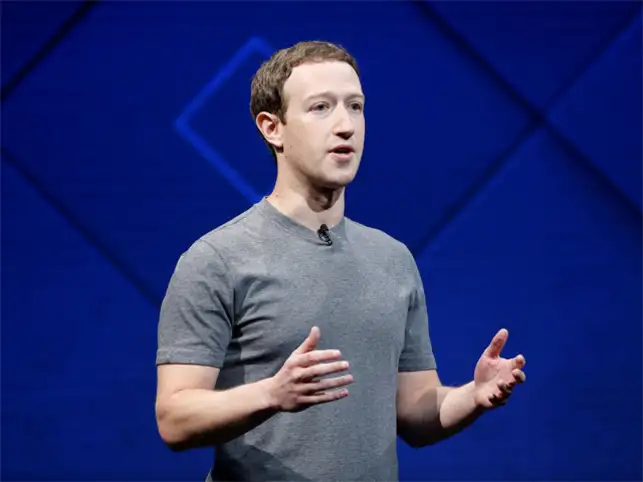
Zuck spoke and the world listened.
But he may not have said enough to appease critics of the world's largest social network.
After five days of silence and with the hashtags #WheresZuck and #DeleteFacebook trending on Twitter, Facebook CEO Mark Zuckerberg on Wednesday addressed a major controversy over how London-based consultancy Cambridge Analytica misused personal data from 50 million Facebook users. In a 936-word post on his Facebook page, Zuckerberg acknowledged that Facebook had made "mistakes" that led to a "breach of trust between Facebook and the people who share their data with us and expect us to protect it."
In interviews with a few media outlets, including CNN, the New York Timesand Wired later in the day, Zuckerberg talked about things it seemed Facebook would never talk about. Asked about government regulation, Zuckerberg said he'd be open to it, particularly regulation related to ad transparency. "I'm not sure we shouldn't be regulated," he said. He also said he'd consider testifying before Congress -- if he was the person at Facebook with the most information about the topic in question. Prominent senators, including Democrats Amy Klobuchar and Mark Warner, have called for him to testify. (Facebook already testified before Congress last November over its role in the presidential election, but the company sent its top lawyer, and not Zuckerberg.)
The interviews seemed intended to cast Zuckerberg as a chastened chief executive, opening up because Facebook's reputation had taken a beating for days as the public, privacy groups, legislators and Facebook users demanded answers. The company also took a financial hit, with its stock dropping 8.5 percentsince news broke about the data exploit on March 16.
Both Zuckerberg and Sheryl Sandberg, Facebook's COO and the other public face of the company, have said they're "sorry" about the incident. But Sandberg's apology went a little further, admitting, "I am so sorry that we let so many people down."
"This is absolutely a turning point," said Bob O'Donnell, an analyst with the research firm Technalysis. "It's angered a lot of people."
Facebook was criticized last week for having its platform exploited by Cambridge Analytica, a digital analytics firm hired by the Trump presidential campaign. According to Facebook, personal data from about 300,000 users was originally collected by a Cambridge lecturer named Aleksandr Kogan in 2013 for a personality quiz app. But given the way Facebook worked at the time, Kogan was able to access data from "tens of millions" of friends of those users, Zuckerberg said. While Kogan collected the data legitimately, he then violated Facebook's terms by passing the information to Cambridge Analytica.
The social network, which boasts about 2 billion monthly users, found out about the infraction in 2015 but didn't inform the public. Instead, Facebook demanded that all the parties involved destroy the information. But reports late last week revealed that not all the data had in fact been deleted. Whistleblower Chris Wylie,a former data scientist for Cambridge Analytica, brought that story to the New York Times and The Guardian. The blowup then raised questions about Facebook's treatment of data and whether it's doing enough to protect it.
The situation was exacerbated by the lack of response from Facebook leadership. Sandberg said she regrets not speaking up sooner. "Sometimes, and I would say certainly this past week, we speak too slowly," she said on CNBC. "If I could live this past week again, I would have definitely had Mark and myself out speaking earlier, but we were trying to get to the bottom of this."
'Lingering under the surface'
Part of the reason the public outcry has been so loud is that people have become increasingly fed up with the social media giant, O'Donnell said. Zuckerberg and his team were already under fire for Facebook's mishandling of fake news spread on its platform and for meddling by Russian trolls during the 2016 presidential election. "It's been lingering under the surface for a while," O'Donnell said.
Zuckerberg and Facebook COO Sheryl Sandberg on Wednesday vowed to make changes to the platform so a similar exploit would never happen again. Facebook said it will "investigate" all apps that have access to large amounts of data, and restrict developers' data access even further. Zuckerberg told the New York Timeson Wednesday that the number of apps is in "the thousands."


Comments
Post a Comment