The Updated Pentax K1 Mk II Improves on Image Quality First and Foremost
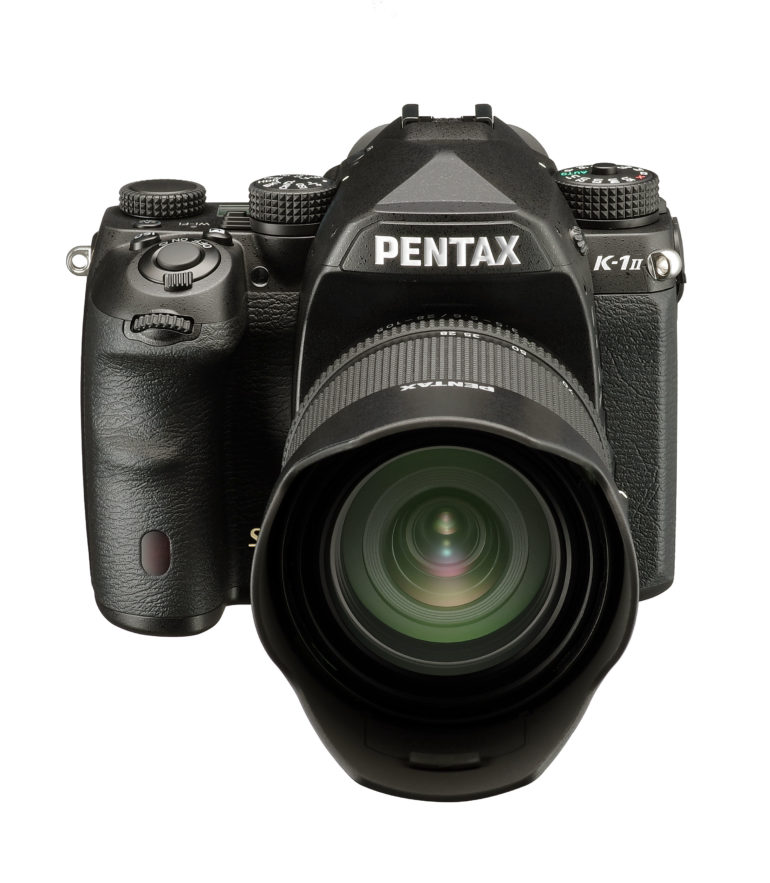
The new Pentax K1 Mk II is looking to improve where it matters the most.
I really liked the Pentax K1, and so when we found out about the new Pentax K1 Mk II I was very intrigued to see how the company would improve the camera. To date, I genuinely believe it and the Nikon D850 to be the best DSLR cameras in the industry–but the Pentax was starting to show its age. When it arrives next month in April, I’m also not sure many Pentaxians will necessarily want to or need to upgrade to it. Let’s take a look at the new Pentax K1 Mk II, right before WPPI.
At the heart of the new Pentax K1 Mk II is the same 36MP sensor as the original camera. This is a bit of a questionable decision. That sensor isn’t bad at all, but other cameras are really able to do quite a bit with more megapickles these days. (Yes, I wrote megapickles.) This sensor can shoot at up to ISO 819,200. It’s also adding in the new Pixel Shift Resolution II mode. Here’s the essential bit from the press release to explain this:
The camera also incorporates Pixel Shift Resolution System II. This new, PENTAX-developed technology uses the same in-camera shake-reduction (SR) mechanism and sensor-shift capabilities as the original Pixel Shift Resolution System found in the PENTAX K-1, which captures four images of the same scene, and then synthesizes them into a single, super-high-resolution composite image. With the Pixel Shift Resolution System II, the camera also obtains RGB color data, resulting in images with significantly finer details and truer colors than those produced by typical full-frame sensors.A new feature in the Pixel Shift Resolution System II is Dynamic Pixel Shift Resolution mode. This mode allows photographers to produce crisp, ultra-high pixel shift resolution images without the need of a tripod, extending the camera’s use to a wider variety of subjects and scenes.
It seems like Pentax’s response to not going to an even higher resolution is the composite feature that they’ve got here. It still has weather sealing and a magnesium alloy body, and it still has that same controversial tilting LCD screen display. And when it comes out on the market, the new Pentax K1 Mk II will retail for $1,999.95.
his new Pentax K1 MK II. But here for your reading pleasure is the world’s longest spec sheet for a camera.
PENTAX K-1 Mark II Specifications
Model Description
| |
Type
|
TTL autofocus, auto-exposure SLR digital-still camera
|
Lens Mount
|
PENTAX KAF2 bayonet mount (AF coupler, lens information contacts, K-mount with power contacts)
|
Compatible Lens
|
KAF4, KAF3, KAF2 (power zoom compatible), KAF, KA mount lens
|
Image capture unit
| |
Image Sensor
|
Primary color filter, CMOS. Size: 35.9 x 24.0 (mm)
|
Effective Pixels
|
Approx. 36.40 megapixels
|
Total Pixels
|
Approx. 36.77 megapixels
|
Dust Removal
|
Image sensor cleaning using ultrasonic vibrations “DR II”
|
Sensitivity
(Standard output)
|
ISO AUTO/100 to 819200 (EV steps can be set to 1EV, 1/2EV or 1/3EV)
|
Image Stabilizer
|
Sensor-shift shake reduction (SR II: Shake Reduction)(5-axis)
|
AA Filter Simulator
|
Moiré reduction using SR unit. OFF/Type1/Type2/ Bracketing(2 images)/ Bracketing (3 images)
|
File formats
| |
File format
|
RAW (PEF/DNG), JPEG (Exif 2.3), DCF2.0 compliant
|
Recorded Pixels
|
[35mm Full Frame] JPEG: L(36M:7360×4912), M(22M:5760×3840), S(12M:4224×2816), XS(2M:1920×1280)
RAW: (36M:7360×4912)[APS-C size] JPEG: L(15M:4800×3200), M(12M:4224×2816), S(8M:3456×2304), XS(2M:1920×1280)
RAW: (15M:4800×3200)
|
Quality Level
|
RAW (14bit): PEF, DNG
JPEG: ★★★ (Best), ★★ (Better), ★ (Good), RAW + JPEG simultaneous capturing available
|
Color Space
|
sRGB, AdobeRGB
|
Storage Medium
|
SD, SDHC and SDXC Memory Card (Conforms to USH-I standards)
|
Dual SD slot
|
Sequential Use, Save to Both, Separate RAW/JPEG, Image copy between slots possible
|
Storage Folder
|
Folder Name: Date (100_1018,101_1019…) or User assigned folder name (Default “PENTX”)
|
Recording File
|
File Name: “IMGP****” or User assigned file name
File name numbering: Sequential, Reset
|
Viewfinder
| |
Type
|
Pentaprism Finder
|
Coverage (FOV)
|
Approx. 100%
|
Magnification
|
Approx. 0.70x (50mmF1.4 at infinity)
|
Eye-Relief Length
|
Approx. 20.6mm (from the view window), Approx. 21.7mm (from the center of lens)
|
Diopter adjustment
|
Approx. -3.5m to + 1.2m-1
|
Focusing Screen
|
Fixed Natural-Bright-Matte III focusing screen
|
Viewfinder Overlay
|
AF Points, Grid Display, Electronic Level, AF Frame, Spot Metering Frame, Crop
|
Live view
| |
Type
|
TTL method using image sensor
|
Focusing Mechanism
|
Contrast detection (Face detection, Tracking, Multiple AF points, Select, Spot)
Focus Peaking: ON/OFF
|
Display
|
Field of View approx. 100%, Magnified view (up to 16x),
Grid Display (4×4 Grid, Golden Section, Scale display, Square 1, Square 2, Grid Color: Black/White ), Histogram, Bright area warning, Composition Adjustment
|
LCD monitor
| |
Type
|
Wide viewing angle TFT color LCD, Air-gapless glass. Flexible-tilt.
|
Size
|
3.2 inch (aspect ratio 3:2)
|
Dots
|
Approx. 1037K dots
|
Adjustment
|
Brightness, Saturation and Colors adjustable
|
Outdoor View Setting
|
Adjustable ±2 step
|
Night Vision LCD Display
|
ON/OFF
|
White Balance
| |
Type
|
Method using a combination of the image sensor and the light source detection sensor
|
White Balance
|
AUTO WB, Multi Auto WB,
Daylight, Shade, Cloudy, Fluorescent Light (D:Daylight Color, N:Daylight White, W:Cool White, L:Warm White), Tungsten Light, CTE,
Manual WB (up to 3 settings), Color Temperature Configuration (up to 3 settings), Copying the white balance setting of a captured image
|
Fine Adjustment
|
Adjustable ±7 steps on A-B axis or G-M axis
|
Autofocus System
| |
Type
|
TTL: Phase-matching autofocus
|
Focus Sensor
|
SAFOX 12, 33 point (25 cross type focus points in the center)
|
Brightness Range
|
EV-3 to 18 (ISO 100 / at normal temperature)
|
AF mode
|
Single AF (AF.S), Continuous AF (AF.C)
|
AF Point Selection
|
Spot, Select, Expanded Area (S, M, L), Zone select, Auto (33 AF points)
|
AF Assist Light
|
Dedicated LED AF assist light
|
Metering
| |
Type
|
TTL open aperture metering using 86K pixel RGB sensor, Multi-segment, Center-weighted and Spot metering
|
Metering Range
|
EV-3 to 20 (ISO100 at 50mm F1.4)
|
Exposure Mode
|
Scene Analyze Auto, Program, Sensitivity Priority, Shutter Priority, Aperture Priority, Shutter & Aperture Priority, Manual, Bulb, Flash X-sync Speed, USER1, USER2, USER3, USER4, USER5
|
EV Compensation
|
±5EV (1/2EV steps or 1/3EV steps can be selected)
|
AE Lock
|
Button type (timer type: two times the meter operating time set in Custom Setting);
Continuous as long as the shutter button is halfway pressed
|
Shutter
| |
Type
|
Electronically controlled vertical-run focal plane shutter
* Electronic shutter when using Pixel Shift Resolution
|
Shutter Speed
|
Auto:1/8000 to 30 sec., Manual:1/8000 to 30 sec. (1/3EV steps or 1/2EV steps), Bulb (Timed exposure setting possible from 10 sec. to 20min.)
|
LV Electronic Shutter
|
ON/OFF
|
Drive modes
| |
Mode Selection
|
Still Image:
Single Frame, Continuous (H, M, L), Self-timer (12s, 2s, Continuous), Remote Control (0s., 3s., Continuous), Bracketing (2, 3 or 5 frames), Mirror-up (Possible to use with Remote Control), Multi-Exposure (Possible to use with Continuous, Self-timer or Remote Control), Interval Shooting, Interval Composite, Interval Movie Record, Star StreamMovie:
Remote Control
* Bracketing, Interval Shooting, Interval Composite, Interval Movie Record and Star Stream are possible to use with Self-timer/Remote Control.
|
Continuous Shooting
|
[35mm Full-Frame] Max. approx. 4.4 fps, JPEG ( L: ★★★ at Continuous H): up to approx. 70 frames, RAW: up to approx. 17 frames
Max. approx. 3.0 fps, JPEG L: ★★★ at Continuous M): up to approx. 100 frames, RAW: up to approx. 20 frames
Max. approx. 0.7 fps, JPEG ( L: ★★★ at Continuous L): up to approx. 100 frames, RAW: up to approx. 100 frames
[APS-C size] Max. approx. 6.4 fps, JPEG ( L: ★★★ at Continuous H): up to approx. 100 frames, RAW: up to approx. 50 frames
Max. approx. 3.0 fps, JPEG L: ★★★ at Continuous M): up to approx. 100 frames, RAW: up to approx. 70 frames
Max. approx. 1.0 fps, JPEG ( L: ★★★ at Continuous L): up to approx. 100 frames, RAW: up to approx. 100 frames*ISO100
|
Multi-Exposure
|
Composite Mode(Additive/Average/Bright)
Number of Shots(2 to 2000 images)
|
Interval Shooting
|
[Interval Shooting] Interval: 2s. to 24h./ Standby Interval: Min.・1s. to 24h., Number of shots: 2 to 2000 images, Start Interval: Now/Self-timer/Remote Control/Set Time [Interval Composite] Interval: 2s. to 24h./ Standby Interval: Min.・1s. to 24h., Number of shots: 2 to 2000 images, Start Interval: Now/Self-timer/Remote Control/Set Time, Composite Mode: Additive/Average/Bright, Save Process: On/Off [Interval Movie] Recorded Pixels: 4K/FullHD/HD, File Format: Motion JPEG (AVI), Interval:2s. to 24h./ Standby Interval: Min・1s. to 24h., Number of shots: 8 to 2000 images (8 to 500 images at 4K), Start Interval:Now/Self-timer/Remote Control/Set Time [Star Stream] Recorded Pixels: 4K/FullHD/HD, File Format: Motion JPEG (AVI), Interval: Min・1s. to 24h., Number of shots: 8 to 2000 images (8 to 500 images at 4K), Start Interval: Now/Self-timer/Remote Control/Set Time, Fade-out: Off/Low/Medium/High
|
External Flash
| |
Flash Modes
|
Auto Flash Discharge, Auto Flash + Red-eye Reduction, Flash On, Flash On + Red-eye Reduction, Slow-speed Sync, Slow-speed Sync + Red-eye, P-TTL, Contrast-control-sync, High-speed sync, Wireless sync
* Contrast-control-sync and High-speed sync requires 2 or more dedicated external flash
|
Sync Speed
|
1/200sec.
|
Flash Exposure Compensation
|
-2.0~+1.0EV
|
Capture Settings
| |
Custom Image
|
Auto Select, Bright, Natural, Portrait, Landscape, Vibrant, Radiant, Muted, Flat, Bleach Bypass, Reversal Film, Monochrome, Cross Processing
|
Cross Process
|
Random, Preset 1-3, Favorite 1-3
|
Digital Filter
|
Extract Color, Replace Color, Toy Camera, Retro, High Contrast, Shading, Invert Color, Unicolor Bold, Bold Monochrome
|
Clarity
|
Adjustable ±4
|
Skin Tone
|
Type1/Type2
|
HDR
|
Auto, HDR1, HDR2, HDR3, Advanced HDR, Exposure bracket value adjustable, Automatic composition correction function
|
Pixel Shift Resolution
|
Available, Motion Correction ON/OFF , Image Stabilization On
|
Lens Correction
|
Distortion Correction, Peripheral Illumin. Correction, Lateral Chromatic Aberration Correction, Diffraction Correction
|
D-RANGE Compensation
|
Highlight Correction, Shadow Correction
|
Noise Reduction
|
Slow Shutter Speed NR, High-ISO NR
|
GPS
|
GPS Logging (Logging Interval, Logging Duration, Memory Card Options), GPS Time Sync
|
Electronic Compass
|
Available
|
Astrotracer
|
Possible
|
Horizon Correction
|
SR On: correction up to 1 degrees, SR Off: correction up to 2 degrees
|
Composition Adjustment
|
Adjustment range of ±1.5mm up, down, left or right (1mm when rotated); Rotating range of 1 degree
|
Electronic Level
|
Displayed in viewfinder (Horizontal and vertical); Displayed on LCD monitor (Horizontal and vertical)
|
Movie
| |
File Format
|
MPEG-4 AVC/H.264(MOV)
|
Recorded Pixels
|
Full HD(1920×1080, 60i/50i/30p/25p/24p)
HD (1280×720, 60p/50p)
|
Sound
|
Built-in stereo microphone, external microphone (Stereo recording compatible)
Recording Sound Level adjustable, Wind Noise Reduction
|
Recording Time
|
Up to 25 minutes or 4GB ; automatically stops recording if the internal temperature of the camera becomes high.
|
Custom Images
|
Auto Select, Bright, Natural, Portrait, Landscape, Vibrant, Radiant, Muted, Flat, Bleach Bypass, Reversal Film, Monochrome, Cross Processing
|
Cross Processing
|
Random, Preset 1-3, Favorite 1-3.
|
Digital Filter
|
Extract Color, Replace Color, Toy Camera, Retro, High Contrast, Shading, Invert Color, Unicolor Bold, Bold Monochrome
|


Comments
Post a Comment